Wood Fence Repaint With Bold Red in Tetherow
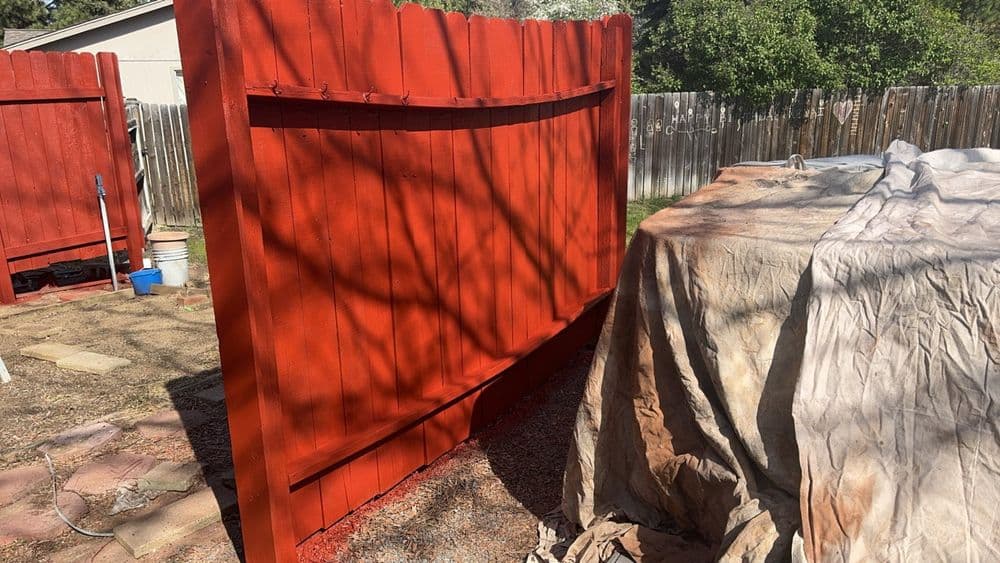
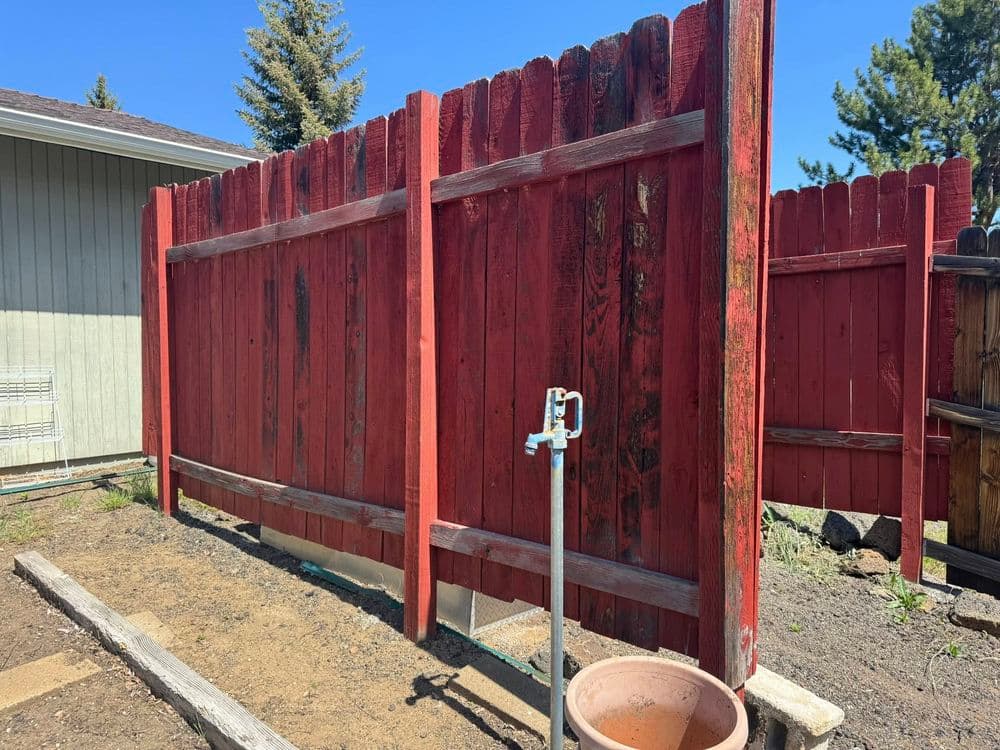
Here's what we were working with - a wood fence that had seen better days. The old red had faded, darkened in spots, and the wood was showing serious weathering across the boards and posts. It wasn't just a cosmetic issue. When a fence gets to that point, moisture starts working its way deeper into the grain, and things go downhill fast from there.
The goal was to get full, even coverage across every board, post, and rail - including the gate. That means prep work matters as much as the actual painting. You can't just roll new color over a surface that's already failing and expect it to hold. We made sure the surface was ready before anything went on it.
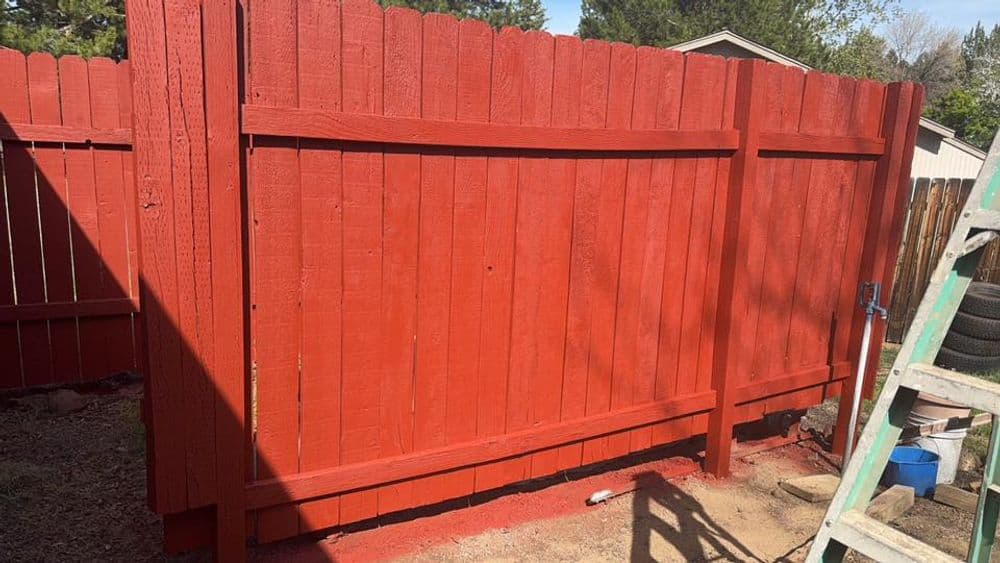
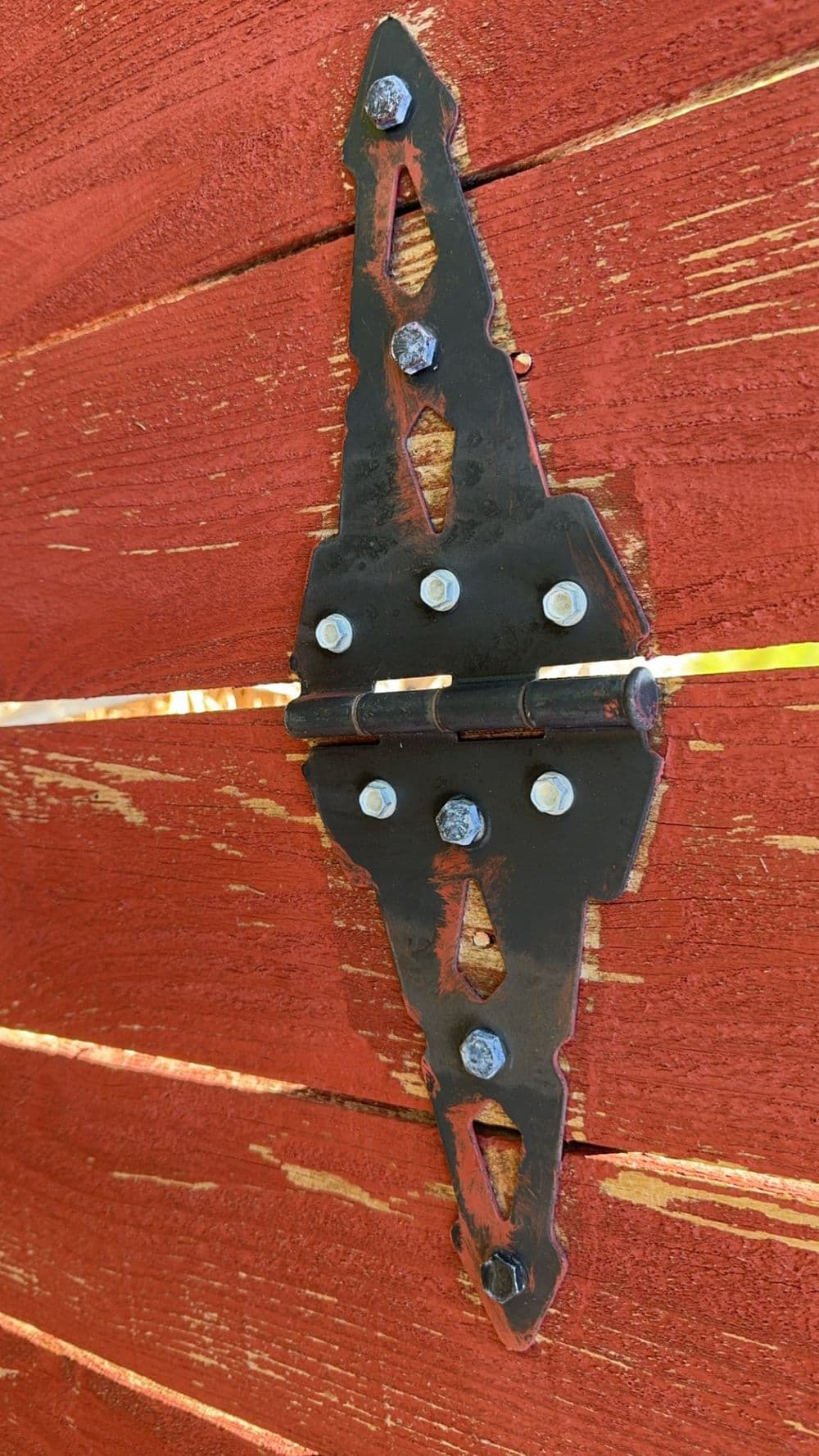
One thing worth noting on a job like this - the hardware. That decorative strap hinge on the gate gets overlooked by a lot of painters. We worked around it carefully so the hardware stayed clean and the finish looked intentional, not sloppy. Small detail, but it makes a difference in how the whole thing reads when you step back and look at it.
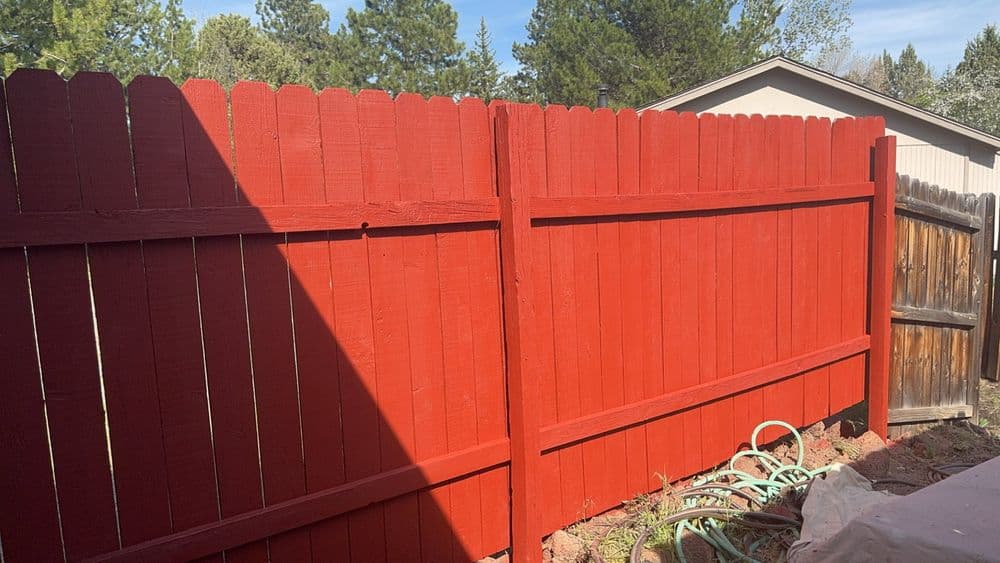
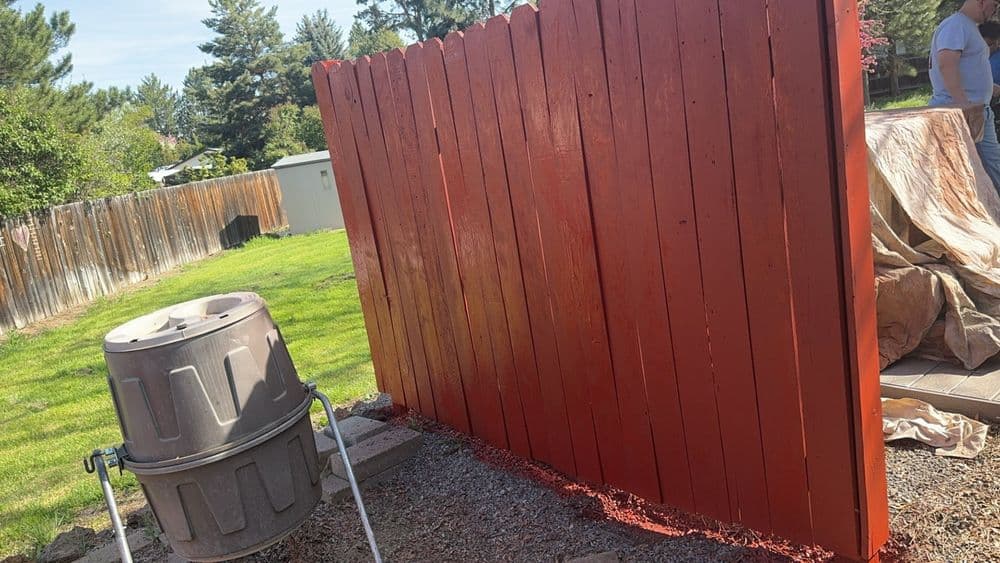
The finished color is a deep, saturated red-orange. It's consistent across the fence panels, the gate, and the adjoining sections - no blotchy areas, no missed edges. Out here in Tetherow, where properties back up to open land and the sun hits hard, a finish like this needs to be applied right or it won't last through the seasons.
Wood fences are a real investment, and keeping up with the paint or stain is honestly the most cost-effective thing you can do to protect that investment. A good repaint done correctly adds years of life to the wood and keeps the whole yard looking sharp.