Full Roof Replacement on a High-Desert Home in Bend
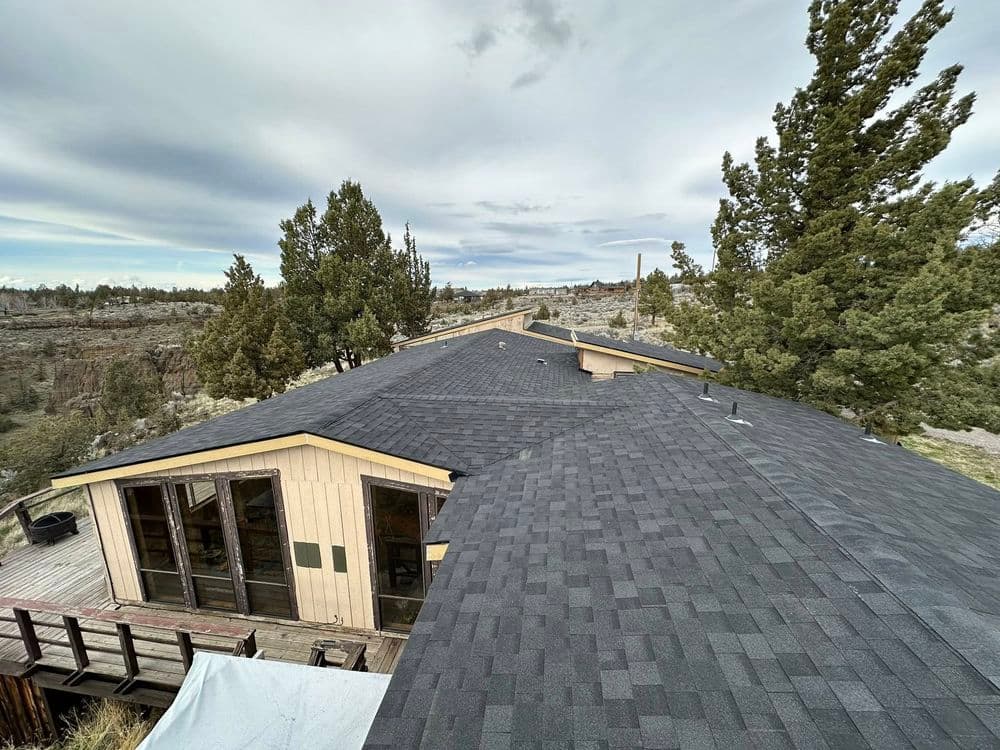
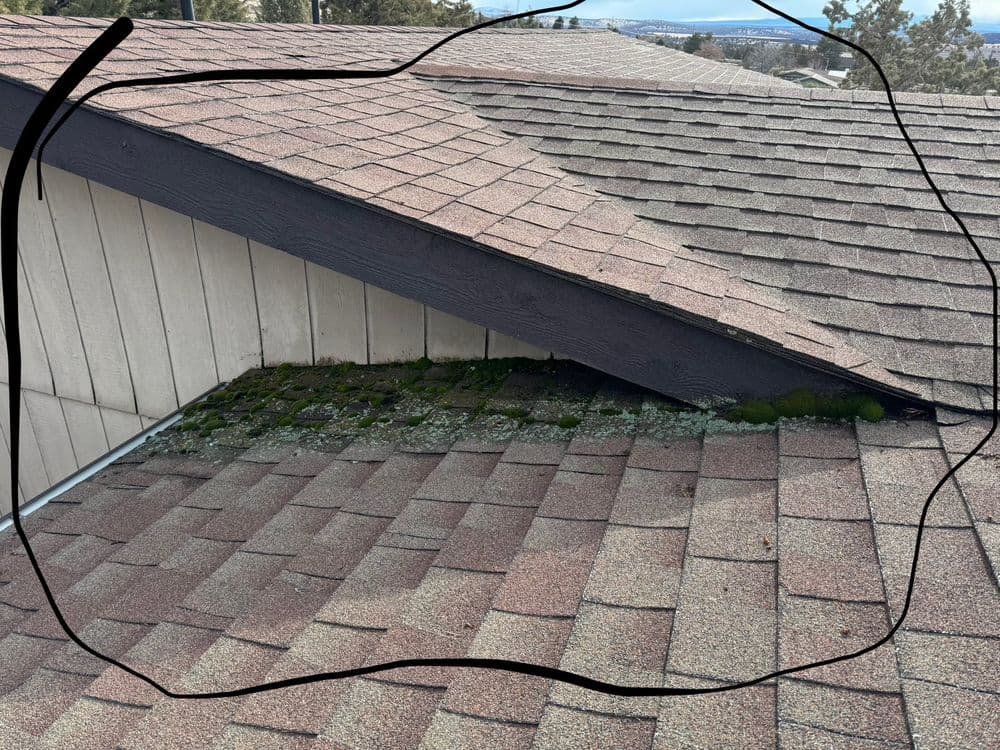
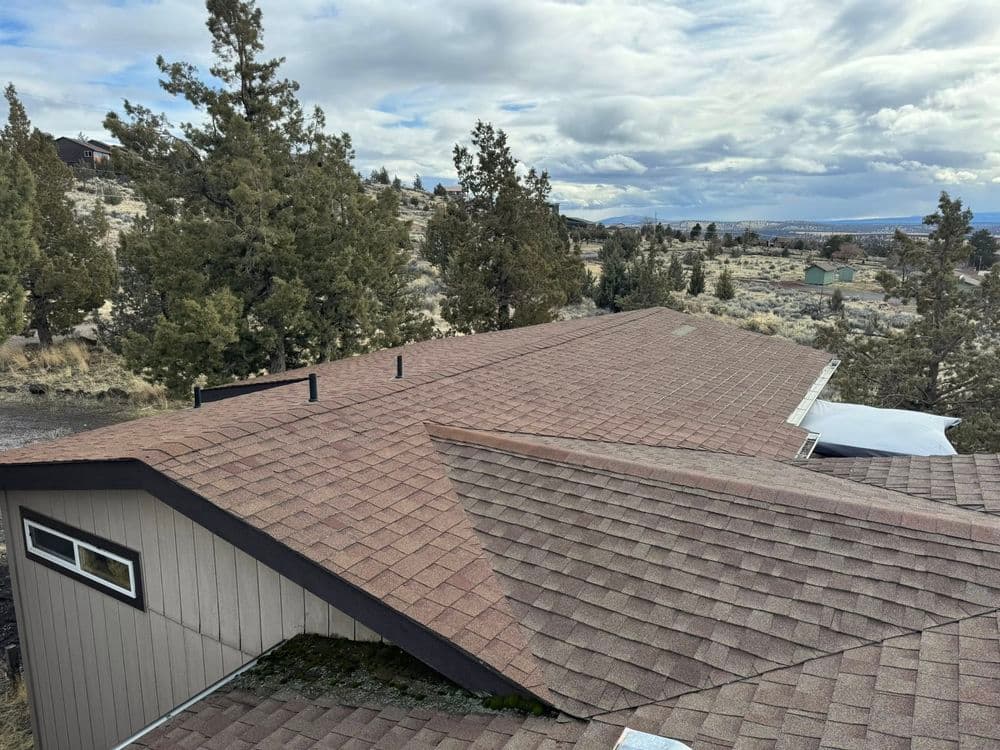
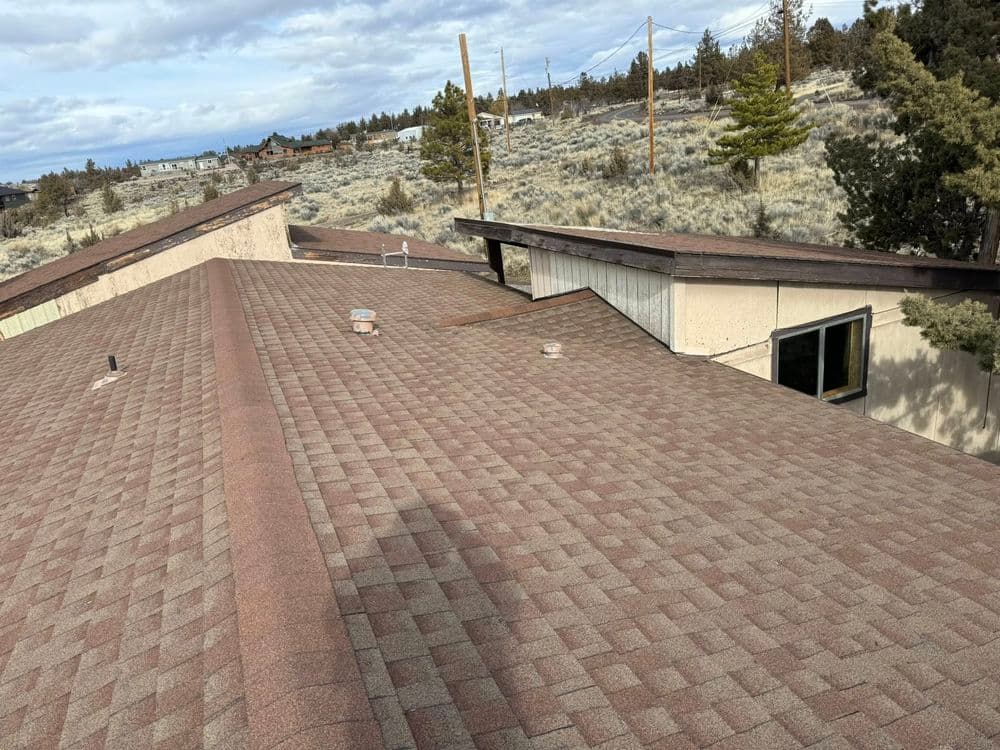
Here's what we were working with - an aging asphalt shingle roof that had seen better days. The old shingles had faded and were showing visible moss growth collecting in the low spots and valleys, the kind of buildup that holds moisture against the roof deck and quietly does damage over time. That's a common problem on homes out in the high desert around Bend, especially when nearby pines and junipers keep certain sections shaded.
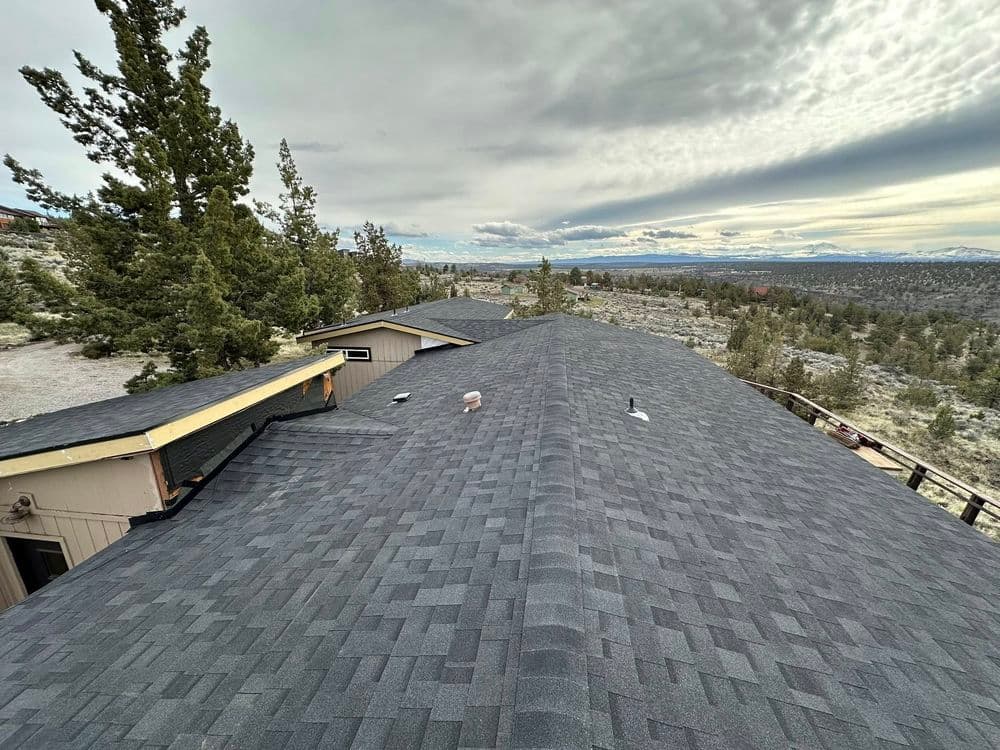
The whole roof came off and we started fresh. This house had a multi-section layout with different roof planes meeting at various angles, which means more detail work at every transition point. Getting the underlayment down right and making sure every valley and edge is properly sealed - that's where a lot of the real work happens. It's not glamorous, but it's what keeps water out for the next couple of decades.
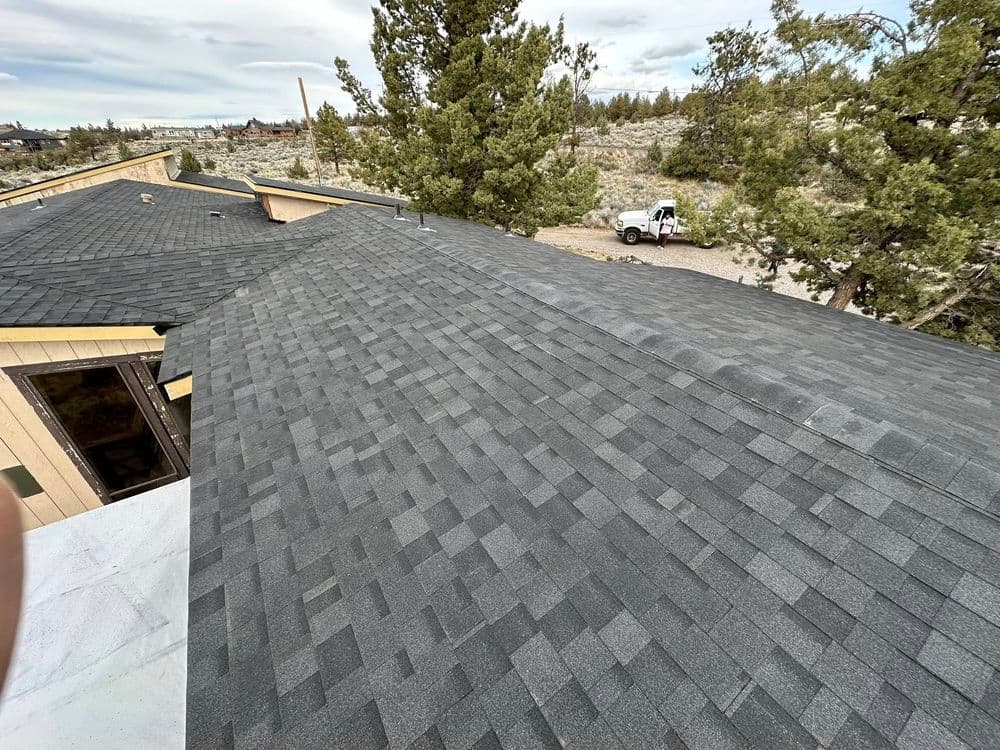
We went with a charcoal gray architectural shingle. On a house with this kind of setting - sitting up above the surrounding desert scrub and pines - a darker, neutral color works well. It doesn't compete with the landscape, and architectural shingles give you a much better depth and texture than three-tab. They also carry better warranties and hold up to the UV exposure you get at this elevation.
The finished roof sits clean and tight across every section. All the penetrations - vents, pipes, anything coming through the deck - are flashed and sealed properly. With a home this size and this layout, the details really matter. A roof that looks good and performs well isn't just about the shingles on top. It's about everything underneath and in between.